

Ignition Positions
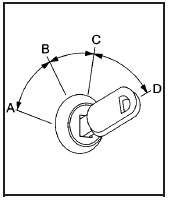
The ignition has four different positions:
In order to shift out of P (Park), ignition must be in the ON/RUN and the regular brake pedal must be applied.
Notice: Using a tool to force the key to turn in the ignition could cause damage to the switch or break the key. Use the correct key, make sure it is all the way in, and turn it only with your hand. If the key cannot be turned by hand, see your dealer/retailer.
A (LOCK/OFF): This position locks the ignition. It also locks the transmission and steering column. This is the only position in which the ignition key can be inserted or removed.
The steering can bind with the wheels turned off center.
If this happens, move the steering wheel from right to left while turning the key to ACC/ACCESSORY. If this doesn’t work, then the vehicle needs service.
B (ACC/ACCESSORY): This position lets the radio and windshield wipers operate while the engine is off.
To use ACC/ACCESSORY, turn the key clockwise.
C (ON/RUN): This position can be used to operate electrical accessories and to display some of the warning and indicator lights. The switch stays in this position when the engine is running.
If you leave the key in the ACC/ACCESSORY or ON/RUN position with the engine off, the battery could be drained. You may not be able to start the vehicle if the battery is allowed to drain for an extended period of time.
D (START): This position starts the engine. When the engine starts, release the key. The ignition switch returns to ON/RUN for driving.
A warning tone will sound and the Driver Information Center (DIC) will display DRIVER DOOR OPEN when the driver door is opened if the ignition is in LOCK/OFF, ACC/ACCESSORY and the key is in the ignition. See DIC Warnings and Messages for more information.
See also:
Engine Air Cleaner/Filter
Engine Air Cleaner/Filter ...
Adding Equipment to the Airbag-Equipped Vehicle
Q: Is there anything I might add to or change about the vehicle that could keep the airbags from working properly?
A: Yes. If you add things that change the vehicle's frame, bumper system, height, fr ...
DSP (Digital Signal Processing)
Settings
For vehicles with DSP, it is used to
provide a choice of different
listening experiences.
The DSP settings for the radio with
CD are:
• normal - Select this setting to
adjust the audio for ...