

Ignition Positions
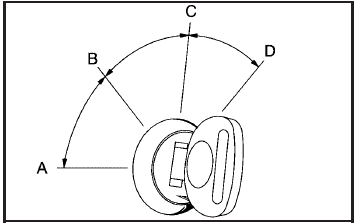
Use the key to turn the ignition switch to four different positions.
A (LOCK): This position locks the ignition and transmission. It is a theft-deterrent feature. You will only be able to remove the key when the ignition is turned to LOCK.
Notice: If your key seems stuck in LOCK and you cannot turn it, be sure you are using the correct key; if so, is it all the way in? Turn the key only with your hand. Using a tool to force it could break the key or the ignition switch. If none of these works, then your vehicle needs service.
B (ACCESSORY): This position lets you use things like the radio and the windshield wipers when the engine is off.
Lengthy operation of features such as the radio in the accessory ignition position may drain the battery and prevent your vehicle from starting.
Do not operate your vehicle in the accessory ignition position for a long period of time.
C (RUN): This is the position for driving.
The battery could be drained if you leave the key in the ACCESSORY or RUN position with the engine off. You may not be able to start your vehicle if the battery is allowed to drain for an extended period of time.
D (START): This position starts the engine.
Key In the Ignition
Never leave your vehicle with the keys inside, as it is an easy target for joy riders or thieves. If you leave the key in the ignition and park your vehicle, a chime will sound, when you open the driver’s door. Always remember to remove your key from the ignition and take it with you. This will lock your ignition and transmission. Also, always remember to lock the doors.
The battery could be drained if you leave the key in the ignition while your vehicle is parked.
You may not be able to start your vehicle after it has been parked for an extended period of time.
See also:
Increasing Speed While UsingCruise Control
There are two ways to go to a higher speed:
• Use the accelerator pedal to get to the higher
speed. Press the button at the end of the
lever, then release the button and the
accelerator pedal. ...
Order of Play
Tracks are played in the following order:
• Play begins from the first track in the first
playlist and continues sequentially through
all tracks in each playlist. When the last track
of the la ...
Theft-Deterrent Feature
THEFTLOCK® is designed to discourage theft of the
vehicle’s radio by learning a portion of the Vehicle
Identification Number (VIN). The radio does not operate
if it is stolen or moved to a di ...