

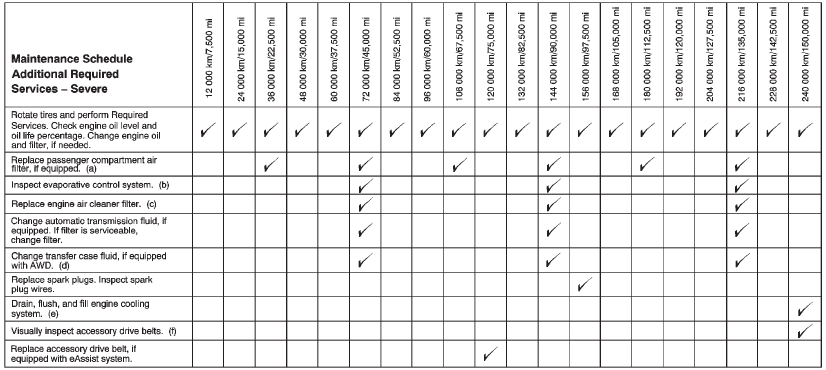
Footnotes — Maintenance Schedule Additional Required Services — Normal
a) Or every two years, whichever comes first. More frequent replacement may be needed if the vehicle is driven in areas with heavy traffic, areas with poor air quality, or areas with high dust levels.
Replacement may also be needed if there is a reduction in air flow, excessive window fogging, or odors.
b) Check all fuel and vapor lines and hoses for proper hook-up, routing, and condition. Check that the purge valve, if the vehicle has one, works properly. Replace as needed.
c) Or every four years, whichever comes first.
d) Do not directly power wash the transfer case output seals. High pressure water can overcome the seals and contaminate the transfer case fluid. Contaminated fluid will decrease the life of the transfer case and should be replaced.
e) Or every five years, whichever comes first. See Cooling System.
f) Or every 10 years, whichever comes first. Inspect for fraying, excessive cracking, or damage; replace, if needed.
See also:
Battery Replacement
To change the batteries, do the following:
1. Loosen the screw on the battery compartment
door located on the left side of the headphone
earpiece.
2. Replace the two AAA batteries in the
compar ...
Using Universal Home Remote
Press and hold the appropriate button for at least
half of a second. The indicator light will come on
while the signal is being transmitted. ...
How OnStar Service Works
Push this blue button to connect to a specially trained OnStar Advisor to verify your account information and to answer questions.
Push this red emergency button to get priority help from specially ...