

How to Add Coolant to the Radiator
WARNING:
An electric engine cooling fan under the hood can
start up even when the engine is not running and
can cause injury. Keep hands, clothing, and tools
away from any underhood electric fan.
WARNING:
Steam and scalding liquids from a hot cooling
system can blow out and burn you badly. They are
under pressure, and if you turn the surge tank
pressure cap — even a little — they can come out
at high speed. Never turn the cap when the
cooling system, including the surge tank pressure
cap, is hot. Wait for the cooling system and surge
tank pressure cap to cool if you ever have to turn
the pressure cap.
If coolant is needed, add the proper mixture directly to the radiator, but be sure the cooling system is cool before this is done.
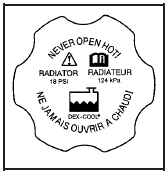
1. You can remove the pressure cap when the cooling system, including the pressure cap and upper radiator hose is no longer hot. Turn the pressure cap slowly counterclockwise.
2. If you hear a hiss, wait for that to stop. A hiss means that there is still some pressure left.
Keep turning the pressure cap and remove it.
3. Fill the cooling system with the proper DEX-COOL coolant mixture, up to the base of the filler neck.
See Engine Coolant (4.6L Engine) or Engine Coolant (3.9L Engine).
4. Then fill the coolant recovery tank to the COLD FILL line.
5. Install the coolant recovery tank cap and the pressure cap. After a day or two of driving, when the engine is cold, check the coolant level in the recovery tank. If it is low, refill it to the COLD FILL line.
If the coolant in the recovery tank is constantly low, you should have a dealer/retailer service department inspect the vehicle for leaks.
Notice: If the pressure cap is not tightly installed, coolant loss and possible engine damage may occur. Be sure the cap is properly and tightly secured.
See also:
Tire and Loading Information Label
Label Example
A vehicle specific Tire and Loading Information
label is attached to the vehicle’s center pillar
(B-pillar). With the driver door open, you will find the
label attached below ...
Driving Through Deep Standing Water
Notice: If you drive too quickly through
deep puddles or standing water, water can
come in through your engine’s air intake and
badly damage your engine. Never drive through
water that is slight ...
Brake System Messages
BRAKE FLUID LOW
This message is displayed when the brake fluid level is low. See Brake Fluid
.
PRESS BRAKE PEDAL TO RELEASE PARK BRAKE
This message is displayed if you attempt to release the elec ...