


Head Restraints
The vehicle’s front seats have adjustable head restraints in the outboard seating positions.
WARNING:
With head restraints that are not installed and
adjusted properly, there is a greater chance that
occupants will suffer a neck/spinal injury in a
crash. Do not drive until the head restraints for all
occupants are installed and adjusted properly.

Adjust the head restraint so that the top of the restraint is at the same height as the top of the occupant’s head.
This position reduces the chance of a neck injury in a crash.
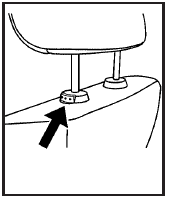
Pull the head restraint up to raise it. To lower the head restraint, press the button, located on the top of the seatback, and push the restraint down.
Push down on the head restraint after the button is released to make sure that it is locked in place.
The head restraints are not designed to be removed.
See also:
Power Driver Seat
To adjust a power driver seat, if equipped:
. Move the seat forward or rearward by sliding the control forward or rearward.
. Raise or lower the front part of the seat cushion by moving the fron ...
Control of a Vehicle
The following three systems help to control the vehicle
while driving—brakes, steering, and accelerator. At
times, as when driving on snow or ice, it is easy to ask
more of those control syste ...
Radio Frequency Statement
This vehicle has systems that operate on a radio frequency that comply with Part 15 of the Federal Communications Commission (FCC) rules and with Industry Canada Standards RSS-210/220/310.
Operation ...