


Weight of the Trailer Tongue
The tongue load (A) of any trailer is an important weight to measure because it affects the total gross weight of the vehicle. The Gross Vehicle Weight (GVW) includes the curb weight of the vehicle, any cargo carried in it, and the people who will be riding in the vehicle.
If there are a lot of options, equipment, passengers, or cargo in the vehicle, it will reduce the tongue weight the vehicle can carry, which will also reduce the trailer weight the vehicle can tow. If towing a trailer, the tongue load must be added to the GVW because the vehicle will be carrying that weight, too. See Vehicle Load Limits for more information.
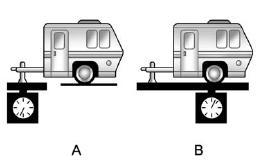
The trailer tongue (A) should weigh 10 to 15 percent of the total loaded trailer weight (B).
After loading the trailer, weigh the trailer and then the tongue, separately, to see if the weights are proper. If they are not, adjustments might be made by moving some items around in the trailer.
See also:
CD Messages
CHECK CD: If this message appears on the
display and/or the CD ejects, it could be for one of
the following reasons:
• It is very hot. When the temperature returns to
normal, the CD should pla ...
Engine Oil Pressure Light
WARNING
Do not keep driving if the oil pressure is low. The engine can become so hot
that it catches fire. Someone could be burned. Check the oil as soon as possible
and have the vehicle servic ...
Auxiliary Devices
For vehicles equipped with the MyLink or IntelliLink infotainment system, see
the separate MyLink/ IntelliLink Features and Functions Guide for more information.
The optional AUX input allows porta ...