


Rear Safety Belt Comfort Guides
This vehicle may have rear shoulder belt comfort guides for each outside passenger position in the rear seat. If not, they are available through your dealer/retailer. The guides may provide added safety belt comfort for older children who have outgrown booster seats and for some adults. When installed the comfort guide positions the shoulder belt away from the neck and head.
Here is how to install a comfort guide to the safety belt:
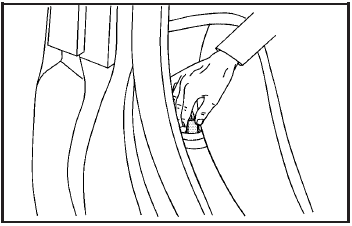
1. Remove the guide from its storage pocket on the rear side of the seatback.
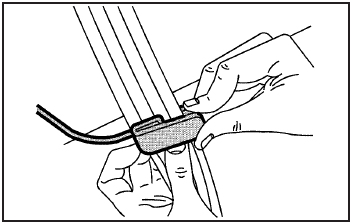
2. Place the guide over the belt, and insert the two edges of the belt into the slots of the guide.
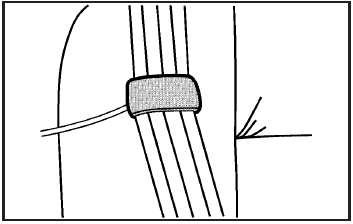
3. Be sure that the belt is not twisted and it lies flat.
The elastic cord must be under the belt and the guide on top.
WARNING:
A safety belt that is not properly worn may not
provide the protection needed in a crash. The
person wearing the belt could be seriously injured.
The shoulder belt should go over the shoulder and
across the chest. These parts of the body are best
able to take belt restraining forces.
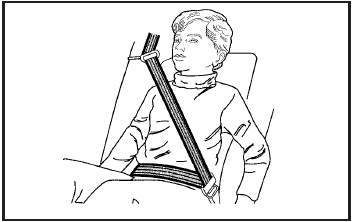
4. Buckle, position, and release the safety belt as described earlier in this section. Make sure that the shoulder belt crosses the shoulder.
To remove and store the comfort guide, squeeze the belt edges together so that the safety belt can be removed from the guide. Slide the guide into its storage pocket on the side of the seatback.
See also:
If the Vehicle Is Stuck
Slowly and cautiously spin the wheels to free the vehicle when stuck in sand, mud, ice, or snow.
If stuck too severely for the traction system to free the vehicle, turn the traction system off and us ...
Driving in Rain and on Wet Roads
Rain and wet roads can mean driving trouble.
On a wet road, you cannot stop, accelerate, or turn
as well because your tire-to-road traction is not
as good as on dry roads. And, if your tires do ...
Power Door Locks
The power door lock
switches are located on
the driver’s and front
passenger’s door
armrests.
Press the lock symbol to lock all of the doors.
To unlock the doors, press the other side of ...