

Interactive Drive Control System
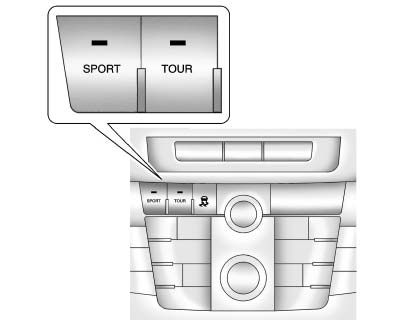
The vehicle may have the Interactive Drive Control System (IDCS). IDCS adapts to the driving style and preference of the driver within one of three driving modes:
Standard: Use for normal city and highway driving. This setting provides precise, comfortable handling. This is a fully automatic mode for city and highway driving.
Tour: Use for long-distance highway driving. This setting provides a smooth, soft ride. Press and release the TOUR button and the light on the button comes on.
This mode provides a comfortable, smooth ride. Press the button again and the system returns to the Standard mode.
Sport: Use where personal preference or road conditions demand more control. This setting provides responsive, controlled handling. Press and release the SPORT button. The light on the button comes on, and the appropriate message displays on the DIC. Press the button again.
The system returns to the Standard mode and the appropriate message displays on the DIC.
IDCS automatically comes on in the Standard mode when the vehicle is started. When the Sport and Tour modes are turned off, the system returns to the Standard mode.
Standard Mode
► The shock absorbers allow a normal ride.► The powertrain reacts normally to the accelerator pedal.
► Power steering assistance is normal.
Tour Mode
► The shock absorbers allow a softer ride.► The powertrain reacts normally to the accelerator pedal.
► Power steering assistance is normal.
Sport Mode
► The shock absorbers stiffen to provide better contact with the road surface.► The powertrain reacts more quickly to the accelerator pedal.
► Power steering assistance is reduced.
Drive Mode Control
Drive Mode Control (DMC) analyzes the driving style and the active state of the vehicle and automatically changes the settings within the selected driving mode. When there is a more noticeable change in driving style or conditions, the driving mode is changed to Sport until the previous driving style returns.
If Standard mode is selected and sport driving is detected, several settings of the Standard mode change to sport settings. If sport driving increases, DMC changes to Sport mode.
If Tour mode is selected and sudden braking or cornering is necessary, DMC changes the suspension settings to Sport mode to increase vehicle stability.
When the driving characteristic or the active state of the vehicle returns to the previous style, DMC changes the settings to the preselected driving mode.
See also:
Tire Pressure Monitor
This vehicle may have a Tire Pressure Monitor System (TPMS).
The TPMS warning light alerts you to a significant loss in pressure of one of
the vehicle's tires. If the warning light comes on, ...
Head Restraint Removal and Reinstallation
The rear outboard head restraints can be removed if they interfere with the proper installation of the child restraint.
To remove the head restraint:
1. Partially fold the seatback forward. See Rear ...
Radio Data System (RDS)
The audio system has a Radio Data System (RDS). RDS features are available for
use only on FM stations that broadcast RDS information. With RDS, the radio can:
Seek to stations broadcasting the ...