

Checking the Fluid Level
Prepare your vehicle as follows:
1. Park your vehicle on a level place. Keep the
engine running.
2. With the parking brake applied, place the shift
lever in PARK (P).
3. With your foot on the brake pedal, move the
shift lever through each gear range, pausing
for about three seconds in each range.
Then, position the shift lever in PARK (P).
4. Let the engine run at idle for three minutes
or more.
Then, without shutting off the engine, follow these steps:
1. Flip the handle up and then remove the dipstick and wipe it with a clean rag or paper towel.
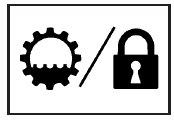
The automatic transmission dipstick handle with this symbol on it is located in the engine compartment on the passenger’s side of the vehicle.
2. Reinstall it back in all the way, wait three seconds and then pull it back out again. If the dipstick does not go down the tube easily, turn the blade and try again until it is fully inserted in the tube.
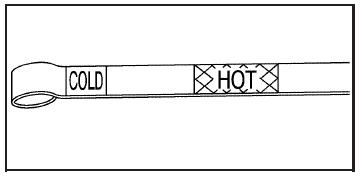
3. Check both sides of the dipstick, and read the
lower level. The fluid level must be in the
COLD area, below the cross-hatched area, for
a cold check or in the HOT or cross-hatched
area for a hot check. Be sure to keep the
dipstick pointed down to get an accurate
reading.
4. If the fluid level is in the acceptable range,
reinstall the dipstick back in all the way;
then flip the handle down to lock the dipstick
in place.
See also:
SERVICE PARKING BRAKE
This message is displayed when
there is a problem with the electric
parking brake. See Parking Brake for more information.
Take the vehicle to your dealer. ...
Automatic Headlamp System
When the exterior lamp control is
set to AUTO and it is dark enough
outside, the headlamps come on
automatically.
There is a light sensor located on
top of the instrument panel. Do not
co ...
Compass Messages
CAL
This message is displayed when the compass needs to be calibrated. See Compass
.
– – –
Three dashes will be displayed if the compass needs service. See your dealer
for service. ...