


Weight of the Trailer Tongue
The tongue load (A) of any trailer is an important weight to measure because it affects the total gross weight of the vehicle. The Gross Vehicle Weight (GVW) includes the curb weight of the vehicle, any cargo carried in it, and the people who will be riding in the vehicle.
If there are a lot of options, equipment, passengers, or cargo in the vehicle, it will reduce the tongue weight the vehicle can carry, which will also reduce the trailer weight the vehicle can tow. If towing a trailer, the tongue load must be added to the GVW because the vehicle will be carrying that weight, too. See Vehicle Load Limits for more information.
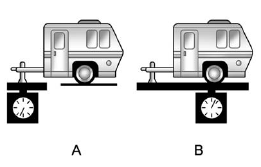
The trailer tongue (A) should weigh 10 to 15 percent of the total loaded trailer weight (B).
After loading the trailer, weigh the trailer and then the tongue, separately, to see if the weights are proper. If they are not, adjustments might be made by moving some items around in the trailer.
See also:
Tachometer
The tachometer displays the engine speed in revolutions per minute (rpm).
Notice: If the engine is operated with the tachometer in the shaded warning area,
the vehicle could be damaged, and the dam ...
Compass
There is a compass display in the Driver Information Center (DIC).
The compass receives its heading and other information from the Global Positioning System (GPS) antenna, StabiliTrak, and vehicle sp ...
Rear Window Lockout
Rear Window Lockout
This feature prevents the rear
passenger windows from operating,
except from the driver position.
Press o to activate the rear
window lockout switch. The LED (A)
comes ...