

Why Safety Belts Work
When you ride in or on anything, you go as fast as it goes.
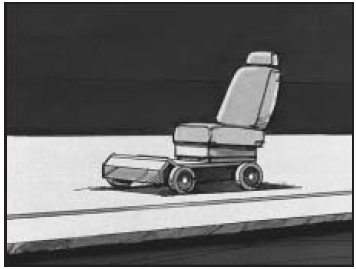
Take the simplest vehicle. Suppose it is just a seat on wheels.
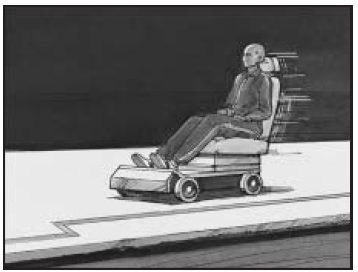
Put someone on it.
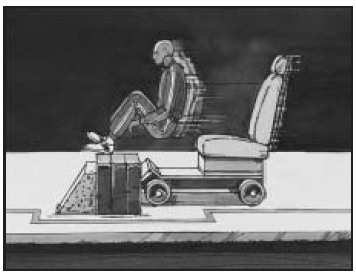
Get it up to speed. Then stop the vehicle.
The rider does not stop.
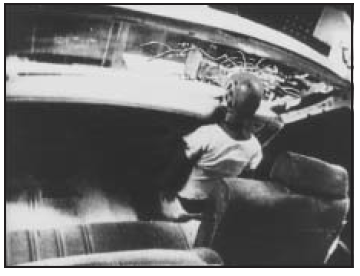
The person keeps going until stopped by something. In a real vehicle, it could be the windshield...
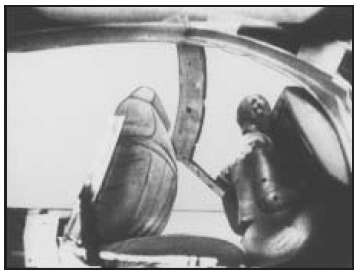
or the instrument panel...
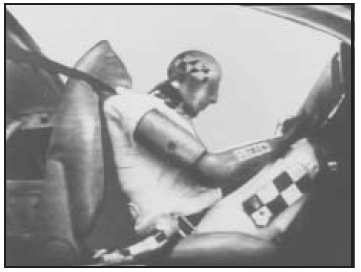
or the safety belts! With safety belts, you slow down as the vehicle does. You get more time to stop. You stop over more distance, and your strongest bones take the forces. That is why safety belts make such good sense.
See also:
Vehicle Care/Appearance Materials
...
Setting Preset Stations
Up to 30 stations (six FM1, six FM2, and six AM,
six XM1 and six XM2 (if equipped)), can be
programmed on the six numbered pushbuttons, by
performing the following steps:
1. Turn the radio on.
...
Driving on Off-Road Hills
Off-road driving often takes you up, down, or
across a hill. Driving safely on hills requires good
judgment and understanding of what your
vehicle can and cannot do. There are some hills
that simp ...