


Child Restraint Systems
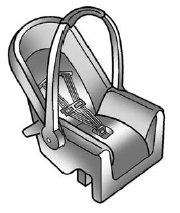
(A) Rear-Facing Infant Seat
A rear-facing infant seat (A) provides restraint with the seating surface against the back of the infant.
The harness system holds the infant in place and, in a crash, acts to keep the infant positioned in the restraint.
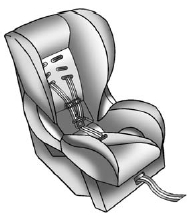
(B) Forward-Facing Child Seat
A forward-facing child seat (B) provides restraint for the child's body with the harness.
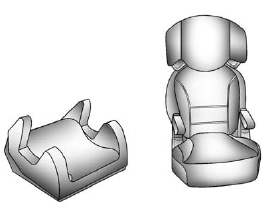
(C) Booster Seats
A booster seat (C) is a child restraint designed to improve the fit of the vehicle's safety belt system. A booster seat can also help a child to see out the window.
See also:
Securing a Child Restraint Designed forthe LATCH System
CAUTION:
If a LATCH-type child restraint is not
attached to anchors, the restraint will not
be able to protect the child correctly. In a
crash, the child could be seriously injured
or killed. M ...
Coverage
Services are provided up to 5 years/100,000 miles
(160 000 km), whichever comes first.
In the U.S., anyone driving the vehicle is covered. In
Canada, a person driving the vehicle without permissi ...
Lumbar Adjustment
Lumbar Adjustment
If available, press and hold the front
or rear of the control to increase or
decrease lumbar support.
To raise or lower lumbar support,
press and hold the top or bottom of ...