

Filling the Tank
 WARNING
Fuel vapor burns violently and a fuel fire can cause bad injuries.
To help avoid injuries to you and others, read and follow all the instructions on the fuel pump island. Turn off the engine when refueling. Do not smoke near fuel or when refueling the vehicle.
Do not use cellular phones. Keep sparks, flames, and smoking materials away from fuel. Do not leave the fuel pump unattended when refueling the vehicle. This is against the law in some places.
Do not re-enter the vehicle while pumping fuel. Keep children away from the fuel pump; never let children pump fuel.
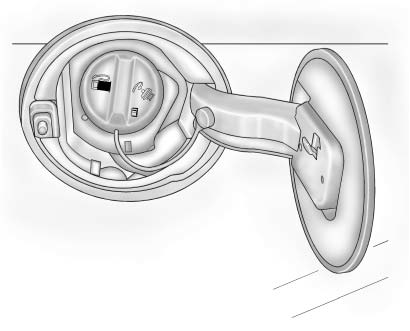
The tethered fuel cap is behind the fuel door on the vehicle's passenger side. The fuel door is unlocked when the vehicle is unlocked.
Locking the vehicle locks the fuel door. Turn the fuel cap counterclockwise to remove. While refueling, hang the tethered fuel cap from the disk on the end of the fuel cap to the mating feature on the fuel door hinge. Reinstall the cap by turning it clockwise until it clicks.
WARNING
Fuel can spray out on you if you open the fuel cap too quickly.
If you spill fuel and then something ignites it, you could be badly burned. This spray can happen if the tank is nearly full, and is more likely in hot weather.
Open the fuel cap slowly and wait for any hiss noise to stop. Then unscrew the cap all the way.
Do not top off or overfill the tank.
Wait a few seconds before removing the nozzle. Clean fuel from painted surfaces as soon as possible.
See Exterior Care .
WARNING
If a fire starts while you are refueling, do not remove the nozzle. Shut off the flow of fuel by shutting off the pump or by notifying the station attendant.
Leave the area immediately.
Notice: If a new fuel cap is needed, be sure to get the right type of cap from your dealer.
The wrong type of fuel cap might not fit properly, might cause the malfunction indicator lamp to light, and could damage the fuel tank and emissions system. See Malfunction Indicator Lamp .
See also:
Automatic Headlamp System
When it is dark enough outside, the Automatic
Headlamp System turns on the headlamps when
the vehicle is started and after the transaxle
has been shifted out of the PARK (P) position.
The headla ...
Fuses and Circuit Breakers
The wiring circuits in the vehicle are
protected from short circuits by a
combination of fuses and circuit
breakers. This greatly reduces the
chance of damage caused by
electrical problems.
...
Connecting and Controlling an iPod® (Radio with CD and Radio with
CD/DVD/MEM)
Not all iPods can be controlled by
the infotainment system.
Connecting an iPod
Connect the iPod to the USB port.
Selecting a Track
Using the control buttons:
• Press or
to select the
pre ...