


Power Steering Fluid
See Engine Compartment Overview for reservoir location.
When to Check Power Steering Fluid
It is not necessary to regularly check power steering fluid unless a leak is suspected in the system, or an unusual noise is heard. A fluid loss in this system could indicate a problem. Have the system inspected and repaired.
How to Check Power Steering Fluid
To check the power steering fluid:
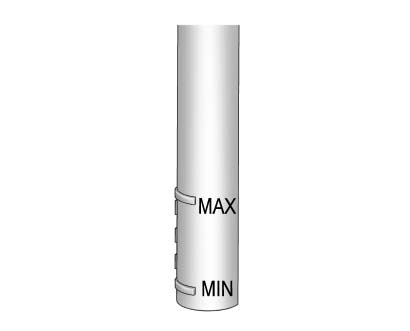 2.0 L L4 Dipstick Shown, 2.4 L L4 Dipstick Similar
1. Turn the key off and let the engine compartment cool down.
2. Wipe the cap and the top of the reservoir clean.
3. Unscrew the cap and wipe the dipstick with a clean rag.
4. Replace the cap and completely tighten it.
5. Remove the cap again and look at the fluid level on the dipstick.
The fluid level should be between the MIN (Minimum) and MAX (Maximum) marks when the engine is cold, and at the MAX mark when the engine is hot. If the fluid is at the MIN mark when the engine is cold or hot, power steering fluid should be added.
The fluid level should be between the MIN and MAX marks on the dipstick.
If the fluid is at or below the MIN mark on the dipstick, add just enough fluid to bring the level between the MIN and MAX marks.
What to Use
To determine what kind of fluid to use, see Recommended Fluids and Lubricants . Always use the proper fluid.
See also:
Theft-Deterrent Feature
THEFTLOCK® is designed to discourage theft of the
vehicle’s radio by learning a portion of the Vehicle
Identification Number (VIN). The radio does not operate
if it is stolen or moved to a di ...
California Perchlorate Materials
Requirements
Certain types of automotive applications, such as airbag
initiators, seat belt pretensioners, and lithium batteries
contained in remote keyless transmitters, may
contain perchlorate materials. S ...
Tire Sealant
Read and follow the safe handling
instructions on the label adhered to
the compressor.
Check the tire sealant expiration
date on the sealant canister. The
sealant canister should be replaced ...