

Securing a Child Restraint in a Rear Outside Seat Position
If your child restraint has the LATCH system, see Lower Anchors and Tethers for Children (LATCH) on page 54.
If your child restraint does not have the LATCH system, you will be using the lap-shoulder belt to secure the child restraint in this position.
Be sure to follow the instructions that came with the child restraint. Secure the child in the child restraint when and as the instructions say.
1. Put the child restraint on the seat.
2. Pick up the latch plate, and run the lap and
shoulder portions of the vehicle’s safety belt
through or around the restraint. The child
restraint instructions will show you how.
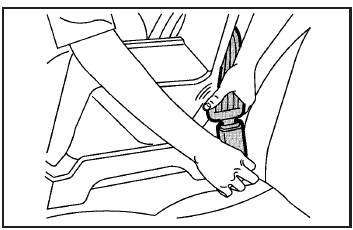
3. Buckle the belt. Make sure the release button is positioned so you would be able to unbuckle the safety belt quickly if you ever had to.
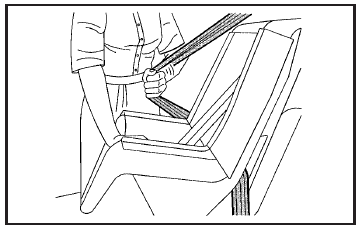
4. Pull the rest of the shoulder belt all the way out of the retractor to set the lock.
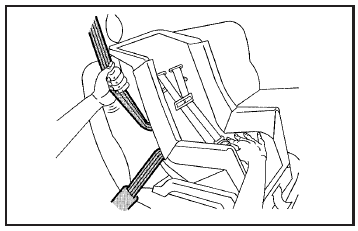
5. To tighten the belt, push down on the child restraint, pull the shoulder portion of the belt to tighten the lap portion of the belt, and feed the shoulder belt back into the retractor.
If you are using a forward-facing child restraint, you may find it helpful to use your knee to push down on the child restraint as you tighten the belt.
6. If your child restraint manufacturer recommends using a top tether, attach and tighten the top tether to the top tether anchor.
Refer to the instructions that came with the child restraint and to Lower Anchors and Tethers for Children (LATCH) on page 54.
7. Push and pull the child restraint in different directions to be sure it is secure.
To remove the child restraint, if the top tether is attached to the top tether anchor, disconnect it. Unbuckle the vehicle’s safety belt and let it go back all the way. The safety belt will move freely again and be ready to work for an adult or larger child passenger.
See also:
Manual Seats
1. Lift the bar under the seat to unlock the seat.
2. Slide the seat to the desired position and release
the bar.
Try to move the seat to be sure it is locked in place.
See Manual Seats. ...
Tires
Use a stiff brush with tire cleaner to
clean the tires.
Notice:
Using petroleum-based
tire dressing products on the
vehicle may damage the paint
finish and/or tires. When applying
a tire d ...
Safety Belt Use During Pregnancy
Safety belts work for everyone, including pregnant
women. Like all occupants, they are more likely
to be seriously injured if they do not wear
safety belts.
A pregnant woman should wear a lap-sh ...