


When It Is Time for New Tires
Various factors, such as maintenance, temperatures, driving speeds, vehicle loading, and road conditions influence when you need new tires.
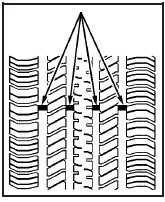
One way to tell when it is time for new tires is to check the treadwear indicators, which will appear when your tires have only 1/16 inch (1.6 mm) or less of tread remaining.
You need new tires if any of the following statements are true:
• You can see the indicators at three or more places around the tire.
• You can see cord or fabric showing through the tire’s rubber.
• The tread or sidewall is cracked, cut, or snagged deep enough to show cord or fabric.
• The tire has a bump, bulge, or split.
• The tire has a puncture, cut, or other damage that cannot be repaired well because of the size or location of the damage.
The rubber in tires degrades over time, even if they are not being used. This is also true for the spare tire, if your vehicle has one. Multiple conditions affect how fast this aging takes place, including temperatures, loading conditions, and inflation pressure maintenance. With proper care and maintenance tires will typically wear out before they degrade due to age. If you are unsure about the need to replace your tires as they get older, consult the tire manufacturer for more information.
See also:
Turning the System On or Off
/VOL (Power/Volume): Press to turn
the system on and off.
Automatic Switch-Off
If the infotainment system has been turned on after the ignition is turned off,
the system will turn off automatic ...
Starting the Vehicle Messages
JUMP START ACTIVE WAIT TO
START
This message displays while
performing an on-board jump start
of the vehicle. See “Jump Starting
(On-board with eAssist Only)” for
more information.
JUM ...
Remote Start Heated Seats
When it is cold outside, the heated seats can be turned on automatically during
a remote vehicle start. The heated seats will be canceled when the ignition is turned
on. Press the control to use t ...