


Child Restraint Systems
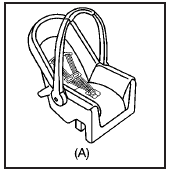
A rear-facing infant seat (A) provides restraint with the seating surface against the back of the infant.
The harness system holds the infant in place and, in a crash, acts to keep the infant positioned in the restraint.
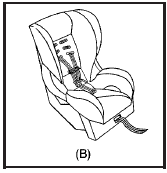
A forward-facing child seat (B) provides restraint for the child’s body with the harness.
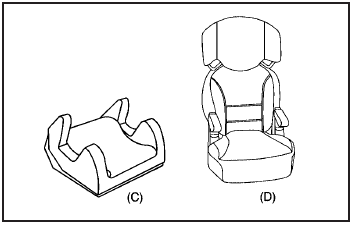
A booster seat (C-D) is a child restraint designed to improve the fit of the vehicle’s safety belt system.
A booster seat can also help a child to see out the window.
See also:
Securing Child Restraints (Rear Seat)
When securing a child restraint in a rear seating position, study the instructions that came with the child restraint to make sure it is compatible with this vehicle.
If the child restraint has the L ...
Making a Call Using
Phone Book
For cell phones that support the
phone book feature, the Bluetooth
system can use the contacts stored
on your cell phone to make calls.
See your cell phone's owner's guide
or contact your wir ...
Windshield Washer Fluid
What to Use
When you need windshield washer fluid, be sure
to read the manufacturer’s instructions before
use. If you will be operating your vehicle in an area
where the temperature may fall bel ...