


Instrument Panel Overview
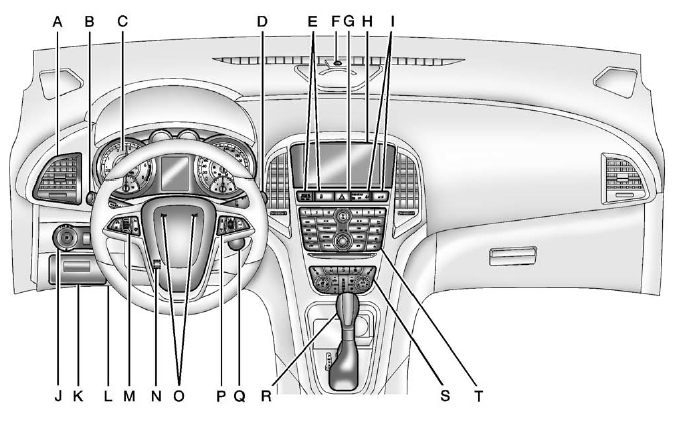
A. Air Vents .
B. Headlamp High/Low-Beam Changer.
Turn and Lane-Change Lever. See Turn and Lane-Change Signals . Driver Information
Center (DIC) Buttons. See Driver Information Center (DIC) .
C. Instrument Cluster .
D. Windshield Wiper/Washer .
E. Keyless Access Ignition. See Ignition Positions (Key Access) or Ignition Positions (Keyless Access) . Traction Control System (TCS) . StabiliTrak® System .
F. Light Sensor. See Automatic Headlamp System .
G. Hazard Warning Flashers .
H. Infotainment Display Screen.
I. Passenger Airbag Status Indicator . Trunk Release. See Trunk Release .
J. Exterior Lamp Controls .Front Fog Lamps (If Equipped). Instrument Panel Illumination Control .
K. Instrument Panel Fuse Block .
L. Data Link Connector (DLC) (Out of View). See Malfunction Indicator Lamp .
M. Cruise Control .
N. Steering Wheel Adjustment .
O. Horn .
P. Steering Wheel Controls .
Q. Ignition Switch. See Ignition Positions (Key Access) or Ignition Positions (Keyless Access) .
R. Shift Lever. See Automatic Transmission .
S. Climate Control Systems (If Equipped). Dual Automatic Climate Control System (If Equipped). Heated Front Seats (If Equipped).
T. Infotainment . Satellite Radio (If Equipped).
See also:
Windshield Wiper Fuses
The windshield wiper motor is protected by a
circuit breaker and a fuse. If the motor overheats
due to heavy snow or ice, the wiper will stop
until the motor cools. If the overload is caused by
so ...
Heated and Ventilated Seats
Heated and Ventilated Seat Buttons Shown, Heated Seat Buttons Similar
If available, the buttons are on the
climate control panel. To operate,
the ignition must be on.
Press to heat the seat c ...
Brakes
This vehicle has disc brakes. Disc
brake pads have built-in wear
indicators that make a high-pitched
warning sound when the brake pads
are worn and new pads are needed.
The sound can come and ...