


Tire and Loading Information Label
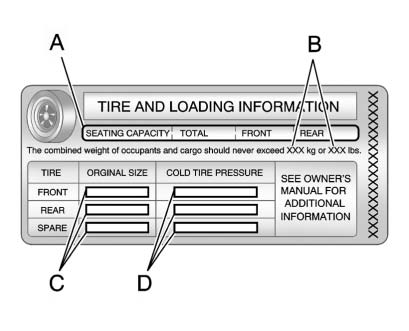
A vehicle-specific Tire and Loading Information label is attached to the vehicle's center pillar (B-pillar).
With the driver door open, you will find the label attached below the door lock post.
The Tire and Loading Information label shows the number of occupant seating positions (A), and the maximum vehicle capacity weight (B) in kilograms and pounds.
The Tire and Loading Information label also shows the tire size of the original equipment tires (C) and the recommended cold tire inflation pressures (D). For more information on tires and inflation see Tires and Tire Pressure .
There is also important loading information on the Certification label. It tells you the Gross Vehicle Weight Rating (GVWR) and the Gross Axle Weight Rating (GAWR) for the front and rear axle. See “Certification Label” later in this section.
See also:
Starting the Vehicle
1. Aim the RKE transmitter at the
vehicle.
2. Press and release .
3. Immediately after completing
Step 2, press and hold until
the turn signal lamps flash, or for
about two seconds if the v ...
Security Light
For information regarding
this light and the vehicle’s
security system, see
Content Theft-Deterrent. ...
Driver Information Center (DIC)
The DIC display is located at the bottom of the
instrument panel cluster. It shows the status of many
vehicle systems and enables access to the
personalization menu.
The DIC buttons are locat ...