

Climate Control Systems
The heating, cooling, defrosting, and ventilation for the vehicle can be controlled with this system.
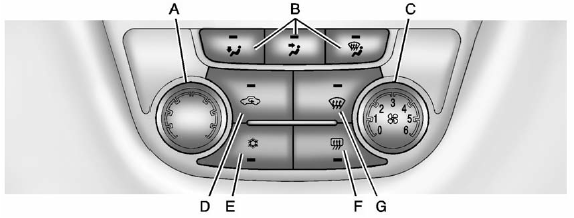
A. Temperature Control
B. Air Delivery Modes
C. Fan Control
D. Recirculation
E. Air Conditioning
F. Rear Window Defogger
G. Defrost
 (Fan Control): Turn the knob clockwise
or counterclockwise to increase or decrease the fan speed. Turn the knob completely
to 0 to turn off the fan.
(Fan Control): Turn the knob clockwise
or counterclockwise to increase or decrease the fan speed. Turn the knob completely
to 0 to turn off the fan.
Temperature Control: Turn the knob clockwise or counterclockwise to increase or decrease the temperature setting.
Air Delivery Mode Control: Press  ,
or
,
or  to change the direction of the
airflow. An indicator light comes on in the selected mode button.
to change the direction of the
airflow. An indicator light comes on in the selected mode button.
 (Floor): Air is directed to the
floor outlets.
(Floor): Air is directed to the
floor outlets.
 (Vent): Air is directed to the
instrument panel outlets.
(Vent): Air is directed to the
instrument panel outlets.
 (Defog): Air is directed to the
windshield, floor outlets, and side window vents.
(Defog): Air is directed to the
windshield, floor outlets, and side window vents.
 (Defrost): Press to clear the windshield
of fog or frost more quickly. Air is directed to the windshield.
(Defrost): Press to clear the windshield
of fog or frost more quickly. Air is directed to the windshield.
For best results, clear all snow and ice from the windshield before defrosting.
Do not drive the vehicle until all the windows are clear.
See also:
Chemical Paint Spotting
Some weather and atmospheric conditions can create a
chemical fallout. Airborne pollutants can fall upon and
attack painted surfaces on the vehicle. This damage can
take two forms: blotchy, ring ...
When the System Does Not Seem to
Work Properly
If the URPA system will not activate due to a temporary
condition, the message PARK ASSIST OFF will be
displayed on the DIC and a red light will be shown on
the rear URPA display when the shift ...
Replacement Bulbs
For replacement bulbs not listed here, contact
your dealer. ...